Digestion 103: Stomach Acid, Bitters, & Pre-Digestion
Jul 27, 2026
Welcome back to the final chapter of our three-part series on mastering upper digestion!
If you are just arriving, we’ve been tracking our digestive tract like a beautifully timed assembly line. In Digestion 101: Digestion Starts Before the First Bite, we explored how your brain, circadian biology, and environmental light signals prepare your stomach before food even touches your lips. Then in Digestion 102: How Chewing Saved My Stomach Acid, we broke down why chewing is a total game-changer. We looked at how thoroughly grinding your food increases its surface area so your enzymes can actually do their job, and how the act of chewing sends a lightning-fast nervous system signal down to your gut to ramp up your digestive fire. If you haven’t read those first two pieces yet, definitely check them out here to see how we laid that foundation.
Now that we’ve covered the brain and the mouth, it’s time to talk about what’s actually happening down in your stomach. This is where things get interesting. How do we make sure our stomach is actually ready to receive food, and where do bitters and stomach acid come into the picture?
Please note: This post may contain affiliate links, meaning I may earn a commission on your purchase.
The True Root of Stomach Acid Issues
Modern digestive problems are almost always framed as a simple math equation: "too much acid" or "too little acid." But physiologically, the real culprit is usually poor stomach acid signaling upstream, which leads to insufficient downstream output.
Your body doesn’t just produce acid at random; it needs a spark. And that is exactly where bitter botanicals come into play.
Bitters activate specialized bitter taste receptors (T2Rs) not only on your tongue but throughout your entire gastrointestinal tract. When these receptors are stimulated, they initiate a massive neuroendocrine cascade that fires up the vagus nerve and activates the enteric nervous system (the nervous system that lives right in your gut).
When you taste or ingest bitters, a beautiful chain reaction occurs:
- Gastrin is released: This hormone directly stimulates your parietal cells to pump out stomach acid.
- Secretions are upregulated: Salivary and gastric juices increase to lubricate and process your food.
- Pancreatic enzymes are readied: Your pancreas begins brewing the enzymes needed to dismantle macro-nutrients.
- The gallbladder primes bile: Your liver and gallbladder ensure adequate bile flow is ready for smooth release into the small intestine.
This is exactly why traditional cultures intentionally included bitter components before a meal. Bitter greens like dandelion, arugula, and radicchio weren't plate garnishes, they were foundational physiological supports. This wisdom is also preserved in the Mediterranean and European apéritif tradition, where herbal bitters were taken before dining to prime appetite and digestive juices.
Clinically, bitters are one of the most elegant tools available because they effortlessly support the parasympathetic (rest-and-digest) nervous system while activating your body's natural stomach acid.
The Role of Hydrochloric Acid (HCl)
Hydrochloric acid (HCl) is produced by parietal cells in the stomach and is tightly regulated by gastrin (which bitters stimulate), acetylcholine (from your vagal input), and histamine signaling.
Stomach acid is the ultimate guardian of your health, responsible for:
- Protein denaturation: Unraveling tightly wound protein strands so enzymes can chop them up.
- Pepsin activation: Converting inactive pepsinogen into active pepsin, the enzyme that chops large protein molecules into absorbable peptides.
- Mineral dissociation: Detaching crucial minerals like iron, zinc, and magnesium from food matrixes so your body can absorb them.
- Vitamin B12 liberation: Unbinding B12 from food proteins.
- Pathogen protection: Serving as a highly acidic defense shield against ingested bacteria, parasites, and fungi.
- Downstream signaling: Triggering the release of pancreatic enzymes and bile when food exits the stomach.
One critical but often overlooked point is that stomach acid production is highly nutrient-dependent. Your parietal cells require zinc, magnesium, sodium, potassium, and specific B vitamins (like B1, B6, and B12) to create acid and maintain healthy vagal signaling.
But remember the catch: stomach acid is required to liberate those very same minerals from your food.
To break this cycle, using a high-quality liquid zinc repletion supplement can be incredibly effective. Because it is a liquid, it bypasses some of the heavy digestive release requirements of food-bound zinc, helping to safely restock your cellular levels while you rebuild your gastric function.
My go-to is Global Healing’s Liquid Zinc (use code CARRIEB) . Unlike most zinc supplements on the market that are made from synthetic, mined minerals (like zinc sulfate or gluconate), this formula is entirely plant-based and wild-crafted.
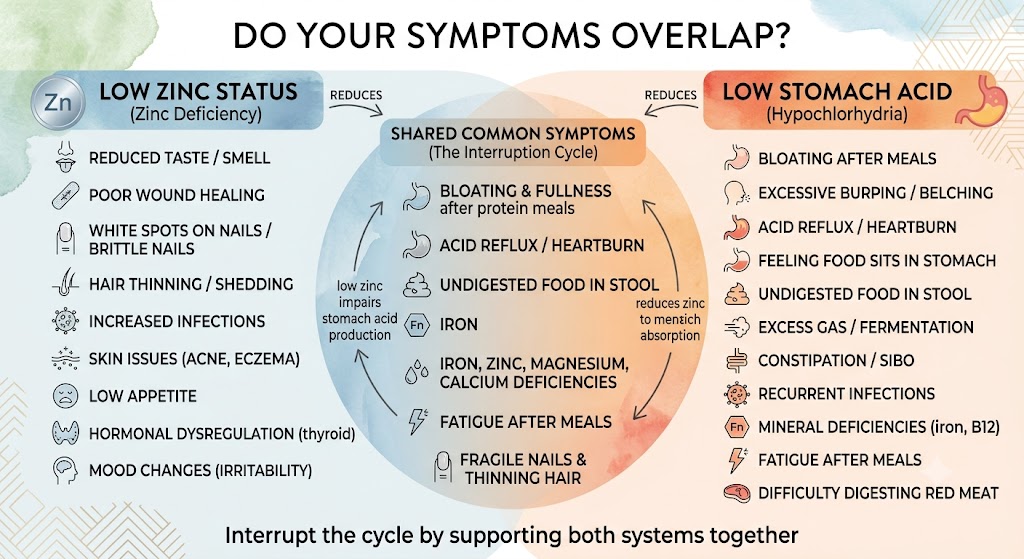
When this self-perpetuating cycle is locked in, you have to interrupt it from both sides. This is why I often consider using targeted digestive support alongside nutrient repletion, rather than just focusing on one piece of the puzzle.
Betaine HCl: Direct Acid Support
When your endogenous (internal) acid production is tanked, Betaine HCl provides exogenous encapsulated hydrochloric acid support to mimic and assist your stomach's natural environment.
It is a fantastic tool when heavy protein meals feel like bricks, when you experience immediate post-meal bloating, or when chronic iron and B12 markers are low.
My top recommended brands are Thorne, Healthy Gut, Designs for Health, Moss Nutrition, and Pure Encapsulations because they actually use clean, clinical-grade ingredients without any of the weird fillers.
I’ve made sure to stock at least one of these brands in my online dispensaries so they're incredibly easy for you to find. If you're in the US, you can grab them through my
Safety Note: Betaine HCl is not appropriate for everyone. If you have active stomach ulcers, use NSAIDs (like ibuprofen) regularly, or have severe gastritis, you should avoid it. It is a temporary bridge to support you while you rebuild your upstream nervous system and circadian signaling.
I certainly needed it when I was healing my gut during the absolute worst of my chronic fatigue and inflamed digestive tract. My stomach acid was so low back then that I slowly worked my way up to needing 7 to 9 capsules at my main meals just to comfortably break down protein! Today, because my upstream signaling is restored, I don't need any exogenous capsule support at all. Instead, I just walk out to my backyard, pick a few fresh dandelion leaves, and eat them before a meal for that beautiful, natural bitter spark.
How do you know if Betaine HCl is actually helping?
- During & Right After Meals: You'll notice a distinct lack of "heaviness" or that "brick in the stomach" feeling. Protein-rich meals go down easily, and early belching, burping, and upper abdominal pressure drop away.
- Throughout the Day: You will experience less overall reflux, reduced lower belly gas and fermentation, and improved bowel regularity. Your stools will become well-formed with less undigested food, gradually shifting to a healthy medium brown color. (Fun fact: I actually have a full 90-minute masterclass video on exactly what your poop is telling you inside my private community!)
- Over Weeks to Months: As mineral and protein absorption skyrocket, you'll see stronger nails, less hair shedding, better exercise recovery, more stable energy, and improved ferritin, B12, and zinc markers on your lab tests.
Listen to your body: Betaine HCl should make eating more comfortable. It should never cause burning, pain, or warmth. If it does, your dose is either too high, your stomach lining needs soothing first, or it isn’t the right tool for you right now.
If your system isn't quite ready for HCl capsules, raw, organic apple cider vinegar (ACV) is a classic, gentler alternative. While its acidity is far weaker than HCl, taking a tablespoon of ACV in a splash of water before meals can provide mild gastric acidification, support smoother stomach emptying, and beautifully improve your post-meal blood sugar response.
If you want another option, I really love Organic Olivia’s GlucoBitters. She actually uses raw organic ACV as the base instead of alcohol, and infuses it with awesome bitters like gentian, bitter melon, and gymnema. It basically gives you the gentle acid of the vinegar and the digestive spark of the bitters at the same time, which is really cool for curbing sugar cravings and helping with bloating. A quick dropperful in a little water right before you eat works wonders.
My Favorite Digestion Support
To help you interrupt the cycle, stoke your gastric fire, and optimize this entire phase of your assembly line, here are my personal favorite, rigorously tested tools:
- Pre-Meal Bitters: To easily trigger that full neuroendocrine cascade on the go, use these handcrafted, organic Herbal Bitters. A few sprays on the tongue 10–15 minutes before your meal changes the entire digestive game.
- Direct Gastric Support: When you need reliable, pure exogenous acid support for heavier protein meals, this ultra-pure Betaine HCl Supplement is exactly what I use and recommend to bridge the gap while your body heals.
- Strategic Nutrient Repletion: To restock your zinc levels without overwhelming an under-acidified stomach, this highly bioavailable liquid zinc repletion supplement is an absolute staple for clinical support.
- Vagus Nerve & Parasympathetic Anchor: Don't forget that your parietal cells respond directly to the nervous system. Applying this organic, deeply grounding essential oil (use code CARRIEB) to the sides of your neck before meals helps drop your body into the perfect state to receive food, you can also take a couple calm breaths, say a prayer and remove distractions during your meal to support this too!
Key Takeaways: How to Apply
Now that we’ve mapped out all of these concepts across this 3-part series, let's look at how to apply them to your daily routine.. To make this actionable, let’s boil the entire framework down into three simple, daily principles:
- Wake Up the Stomach Upstream: Digestion is an anticipatory act. Before your first bite, use natural light signaling, take 5 deep breaths, apply your grounding essential oil (use code CARRIEB), or use Herbal Bitters to shift from fight-or-flight into an active digestive state.
- Never Outsource Your Mouth's Job: Your stomach does not have teeth. Chew every single bite of whole, living food 30+ times. This simple, free act multiplies the surface area of your food, letting your enzymes and stomach acid work with total efficiency rather than getting jammed.
- Support and Build Your Stomach Acid: Stop looking at downstream bloating as a sign of "sensitive digestion." Treat it as a sign of under-acidification. Supply your body with the zinc, minerals, and bitter cues it needs to build its own protective acid shield, using targeted Betaine HCl Supplement support if you need to bridge the gap.
Closing the Loop on Your Digestion
At the end of the day, bloating, gas, chronic malabsorption, and irregular bowel movements are rarely problems that start at the exit point. They are the downstream consequences of an upper digestive assembly line that has lost its rhythm.
When you reconnect your eating habits to your environment, slow down your processing, honor your biological clocks, and use targeted bitter botanicals to activate your stomach acid, digestion stops being something your body struggles against, it becomes what it was always meant to be: an effortless act of deep, radiant nourishment.
Want to Dive Deeper?
- Good Read: "Why Stomach Acid Is Good for You: Natural Relief from Heartburn, Indigestion, Reflux and GERD" by Jonathan V. Wright M.D. If you've been caught in the exhausting cycle of low stomach acid and poor nutrient absorption we talked about today, this book is your roadmap out. Dr. Wright beautifully breaks down the physiological reality that heartburn and GERD are almost always caused by too little stomach acid, not too much. It is an eye-opening, clinical guide that will help you understand how to safely restore your gastric fire and stop relying on temporary, acid-blocking band-aids.
- Free Challenge: New here and want to see how supportive light and hydration can be in your daily life? Join my free 5-Day Intro Challenge to learn one foundational circadian concept each day, delivered straight to your inbox!
- Community: Wish you could ask me your specific health questions? I love writing these pieces, but they only scratch the surface of your individual needs. For deeper, personalized guidance, meet me inside Sol Circle! When you join our private community, you get regular access to live coaching and Q&As with me, plus instant entry to our resource vault (including our popular 90-minute digestion masterclass). Stop guessing on forums and let's figure out your health journey together. 👉 Join the Next Live Q&A inside Sol Circle
Scientific References & PubMed Support:
-
Study: "Bitter taste receptors and α-gustducin regulate the secretion of ghrelin with functional effects on food intake and gastric emptying." PubMed ID (PMID): 21245306
-
Study: "Intestinal bitter taste receptor activation alters hormone secretion and imparts metabolic benefits." PubMed ID (PMID): 30120064
-
Study: "Zinc and gastrointestinal disease." PubMed ID (PMID): 25426174
-
Study: "Zinc Deficiency and Therapeutic Value of Zinc Supplementation in Pediatric Gastrointestinal Diseases." PubMed ID (PMID): 37836587
-
Study: "Gastric Re-acidification with Betaine HCl in Healthy Volunteers with Rabeprazole-Induced Hypochlorhydria." PubMed ID (PMID): 23943201
-
Study: "Meal-Time Supplementation with Betaine HCl for Functional Hypochlorhydria: What is the Evidence?" PubMed ID (PMID): 32328005
-
Study: "The Use of Betaine HCl to Enhance Dasatinib Absorption in Healthy Volunteers with Rabeprazole-Induced Hypochlorhydria." PubMed ID (PMID): 25274610
New to Circadian Health?
Start With My Free 5-Day Intro Challenge
Over the years, I have narrowed down the foundational principles that most dramatically shift how people feel. If I could only teach five things to someone brand new to circadian health, these would be them.
Sign up for my free challenge and learn one foundational concept each day, delivered straight to your inbox.
I don't send spam. You may unsubscribe easily at any time.